4.5/5
4.5/5





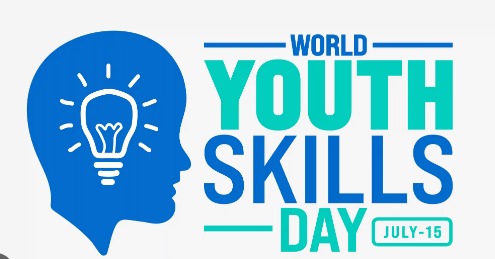
World Youth Skill Day 2026
Every year, 15th July is observed as the World Youth Skills Day.
Aim:
- To equip young people around the world with essential skills for employment, work, and entrepreneurship.
- To achieve the Incheon Declaration: Education 2030, “which devotes considerable attention to technical and vocational skills development, specifically regarding access to affordable quality technical and vocational education and training (TVET) institutions.’’
- This vision is fully captured by Sustainable Development Goal-4, which aims to “Ensure inclusive and equitable quality education and promote lifelong learning opportunities for all”.
- To eliminate gender disparity.
Young people are nearly three times more likely to be unemployed than adults. Over 40% of youth worldwide are not in employment, education, or training (NEET). The problem is more profound for young women, with only 27.4% having access to employment opportunities compared to 40.3% of young men.
The India Skills Report 2026 shows India’s employability rate rising to 56.35% (from 54.81%), signalling a rapid improvement in how “job-ready” the youth are.
What it is?
The India Skills Report 2026 is an annual nationwide assessment of India’s workforce readiness, prepared by ETS, CII, AICTE, AIU and Taggd, based on surveys of students, recent graduates and employers across key sectors.
Aim:
To measure employability and skill gaps across education streams, sectors and regions.
To map emerging trends in AI, gig work, digital fluency and hiring patterns.
To help policymakers, academia and industry align curricula, training and recruitment with the demands of the future of work.
Key Trends Identified in the Report:
Women Employability: 54% (higher than men at 51.5%)
Highest Employability: Computer Science (80%) and IT (78%)
AI & Digital Skills: Major drivers of employment growth.
Skills-First Hiring: Focus shifting from degrees to skills and micro-credentials.
Gig Hiring: Increased by 38%; gig jobs account for 16% of total employment.
Internship Demand: 92.8% of students seek practical industry exposure.
Hiring Outlook: Companies plan to increase hiring by 40% next year.
IT Sector: Highest fresher hiring at 35%.
Commerce Employability: 62.81% (highest among major non-technical streams).
ITI Employability: 45.95% (improving vocational skills).
Steps taken by India for Skilling Youth
Industrial Training Centres (ITIs): Conceptualized in the year 1950, aims to expand and modernize the existing Long-Term Training ecosystem in India.
Pradhan Mantri Kaushal Vikas Yojana (PMKVY): Launched in 2015, it aims to provide free skill training avenues to youths of India.
Pradhan Mantri Kaushal Vikas Yojana 3.0: It is launched 2021 in a bid to empower India’s youth with employable skills by making over 300 skill courses available to them.
Recognition of Prior Learning: It was launched in 2015 to recognize the prior skills acquired by individuals. It is one of the key components of PMKVY.
Under this an individual with a certain set of skills or with prior learning experience is assessed and certified under RPL with grade according to the National Skills Qualification Framework (NSQF).
National Career Service Project: Launched in 2015 to offer free online career skills training through its National Career Service (NCS) project for job-seekers registered with it.
Skill Management and Accreditation of Training Centres (SMART): It provides a single window IT application that focuses on the accreditation, grading, Affiliation and Continuous monitoring of the Training Centres (TC) in the skill ecosystem.
Skills Acquisition and Knowledge Awareness for Livelihood (SANKALP): Its focus is on district-level skilling ecosystem through convergence and coordination. It is a Centrally Sponsored Scheme which is collaborated with the World Bank.
Skills Strengthening for Industrial Value Enhancement: STRIVE scheme is a World Bank assisted-Government of India project with the objective of improving the relevance and efficiency of skills training provided through ITIs and apprenticeships.
Pradhan Mantri YUVA Yojana (Yuva Udyamita Vikas Abhiyan): Launched in the year 2016, it aims at creating an enabling ecosystem for Entrepreneurship development through Entrepreneurship education and training; Advocacy and easy access to entrepreneurship support network and Promoting social enterprises for inclusive growth.
Young, Upcoming and Versatile Authors’ (YUVA) scheme, a mentorship programme to train young authors.
Kaushalacharya Awards: Launched to recognize the contribution made by skill trainers and to motivate more trainers to join the Skill India Mission.
Scheme for Higher Education Youth in Apprenticeship and Skills (SHREYAS): The scheme is to provide industry apprenticeship opportunities to the general graduates exiting in April 2019 through the National Apprenticeship Promotion Scheme (NAPS).
Atmanirbhar Skilled Employee Employer Mapping (ASEEM): Launched in 2020, it is a portal to help skilled people find sustainable livelihood opportunities.