4.5/5
4.5/5





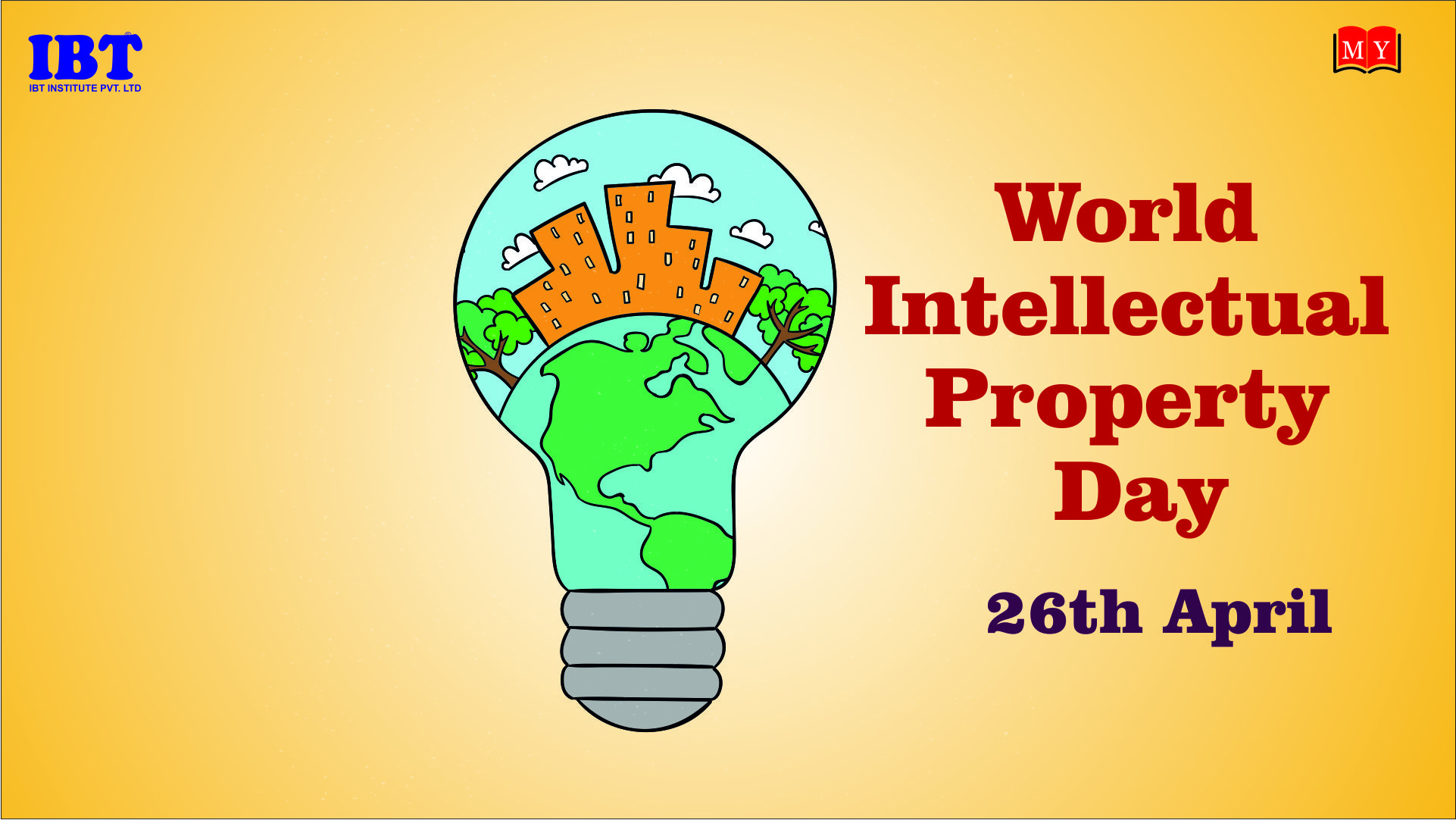
World Intellectual Property Day: 26th April
World Intellectual Property Day: 26th April
World Intellectual Property Day is celebrated on April 26th every year. It is a day dedicated to highlighting the role that intellectual property (IP) rights play in encouraging innovation and creativity across the globe.
-
2026 Theme: "IP and Sports: Ready, Set, Innovate."
-
Organized by: World Intellectual Property Organization (WIPO).
-
Significance: Anniversary of the day the WIPO Convention came into force in 1970.
History and Origin
-
Establishment: In 2000, WIPO’s member states designated April 26th as World IP Day.
-
Objective: To increase general awareness of how patents, copyrights, trademarks, and designs impact daily life and to celebrate the contribution of creators and innovators to the development of societies.
-
Why 26th April? This date marks the day in 1970 when the WIPO Convention officially entered into force, establishing the organization as a specialized agency of the United Nations.
The 2026 Theme: IP and Sports
The 2026 campaign, "Ready, Set, Innovate," explores the intersection of sports and intellectual property.
-
Technological Innovation: Patents protect the "game-changing" tech in footwear, aerodynamics in racing, and wearable fitness trackers that push athletic boundaries.
-
Branding & Identity: Trademarks safeguard the logos, team names, and athlete brands that build global fan bases and drive commercial value.
-
Media & Storytelling: Copyright protects the live broadcasts, sports documentaries, and photography that allow fans to experience the thrill of the game from anywhere.
-
Design: Industrial designs protect the unique aesthetics of sports gear, from the shape of a golf club to the pattern on a professional football.
Types of Intellectual Property (IP)
Understanding the different "tools" in the IP toolbox is essential for protecting creativity:
-
Patents: Protect new inventions and technical solutions (e.g., a new type of shock-absorbing material).
-
Trademarks: Protect signs, logos, or expressions that distinguish goods or services (e.g., the Nike "Swoosh" or Olympic rings).
-
Copyright: Protects original literary and artistic works (e.g., books, music, movies, software).
-
Industrial Designs: Protect the visual appearance of a product (e.g., the sleek curve of a sports car).
-
Geographical Indications (GI): Protect products that have a specific geographical origin and qualities due to that origin (e.g., Darjeeling Tea).
Intellectual Property in India
India has a robust legal framework for IP, which is vital for its growing startup and tech ecosystem:
-
Nodal Agency: The Office of the Controller General of Patents, Designs and Trademarks (CGPDTM) under the Ministry of Commerce and Industry.
-
Key Legislation:
-
The Patents Act, 1970.
-
The Trade Marks Act, 1999.
-
The Copyright Act, 1957.
-
The Geographical Indications of Goods (Registration and Protection) Act, 1999.
-
-
National IP Rights (IPR) Policy: Launched in 2016 with the slogan "Creative India; Innovative India."
Important Facts
-
WIPO Headquarters: Geneva, Switzerland.
-
UPSC/Exam Relevance: Often appears in questions related to Science & Technology, Economy, and International Organizations.
-
TRIPS Agreement: The "Trade-Related Aspects of Intellectual Property Rights" is a key international agreement between all member nations of the World Trade Organization (WTO).
0 like |
0 comment