4.5/5
4.5/5





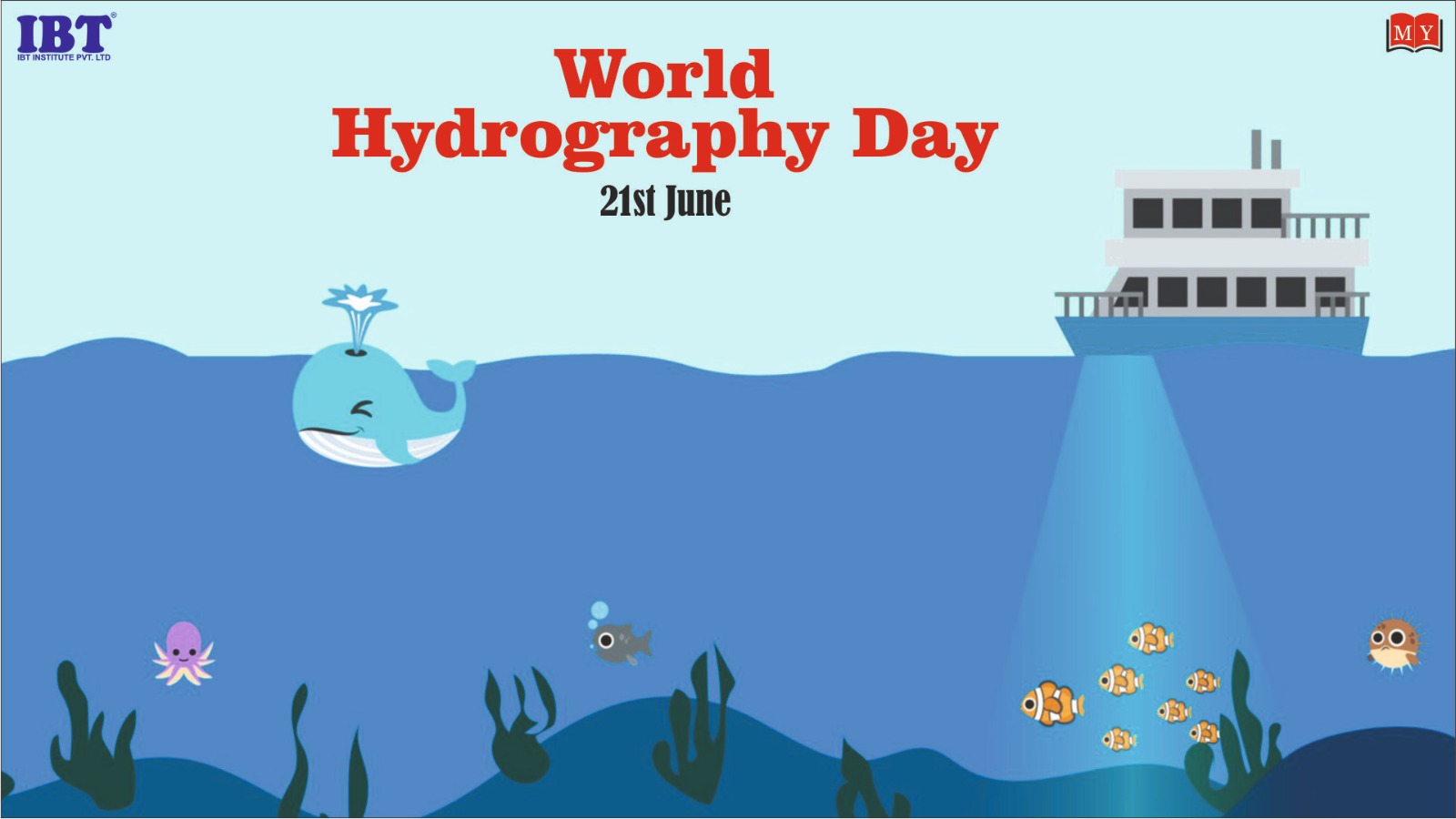
World Hydrography Day: 21st June
World Hydrography Day: 21st June
Observed annually on June 21st, World Hydrography Day is a global recognition of the science of hydrography—the measurement and description of the physical features of bodies of water. Established by the International Hydrographic Organization (IHO), this day highlights the critical role hydrography plays in safe navigation, marine environmental protection, and the sustainable management of the world’s oceans, seas, and waterways.
What is Hydrography?
Many people mistake hydrography for simple map-making, but it is a complex scientific discipline. Hydrographers measure:
-
Bathymetry: The depth of water bodies and the topography of the seafloor.
-
Water Levels: Tides, currents, and wave dynamics.
-
Physical Properties: The nature of the seabed (sediment, rock, etc.) and water quality.
This data is vital for creating nautical charts, which are the "roadmaps" of the sea. Without accurate hydrographic data, ships, tankers, and ferries would be unable to navigate safely through shallow or unpredictable waters.
Why Is This Day Important?
While it may sound like a niche scientific field, hydrography underpins nearly every activity that takes place at sea:
-
Safety of Life at Sea (SOLAS): Nearly 90% of global trade is carried by sea. Hydrographic charts prevent shipwrecks, protect cargo, and ensure the safety of millions of seafarers.
-
Economic Development: Reliable hydrographic data is essential for the construction of ports, harbors, and offshore energy infrastructure, such as wind farms and oil platforms.
-
Climate Change Adaptation: As sea levels rise, hydrographic monitoring helps coastal communities understand changes in flood risks, storm surges, and shoreline erosion.
-
Marine Protection: To protect coral reefs or sensitive habitats, authorities must first map the area accurately. Hydrography enables "marine spatial planning," ensuring that human activity does not irreparably damage the ocean floor.
2026 Theme: "Hydrography: Supporting the Blue Economy"
For 2026, the focus remains on the "Blue Economy"—the sustainable use of ocean resources for economic growth, improved livelihoods, and jobs while preserving the health of ocean ecosystems.
-
Data-Driven Decision Making: The theme emphasizes that high-quality hydrographic data is the foundational layer for any sustainable blue economy initiative.
-
Technological Advancement: The day highlights how new technologies—such as autonomous underwater vehicles (AUVs), satellite-derived bathymetry, and AI-driven data processing—are making it easier and cheaper to map the deep ocean, which remains largely unexplored.
Challenges Facing Hydrography
Despite its importance, the world’s waters remain significantly under-mapped.
-
The "Seabed 2030" Goal: The IHO and the Intergovernmental Oceanographic Commission (IOC) are working toward the Seabed 2030 initiative, which aims to produce a complete map of the entire ocean floor by the year 2030. Currently, only a fraction of the global seabed has been measured to modern, high-resolution standards.
-
The Need for Investment: Hydrographic surveying is resource-intensive and expensive. World Hydrography Day serves as a call for governments and the private sector to prioritize investment in national hydrographic services.
A Call for Awareness
On June 21st, maritime nations and scientific institutions around the world host seminars, harbor open days, and educational programs to showcase the "hidden" work of hydrographers.
The day reminds us that while we often focus on the world above the waves, the stability of the global economy, the safety of international travel, and the future of our climate are all deeply dependent on the accurate, science-based mapping of the world beneath the water’s surface.
0 like |
0 comment