4.5/5
4.5/5





World Hepatitis Day 2026.
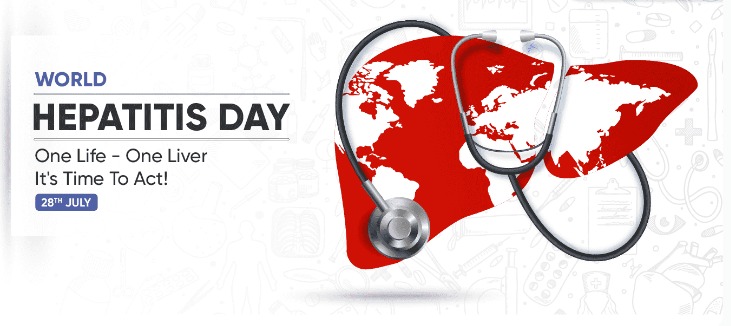
World Hepatitis Day 2026
World Hepatitis Day 2026 is observed on Tuesday, July 28, 2026, to raise global awareness about viral hepatitis, a major public health challenge affecting millions of people worldwide. Led by the World Health Organization (WHO), the campaign encourages governments, healthcare providers, and communities to improve access to testing, vaccination, treatment, and prevention services. The day also highlights the urgent need to eliminate viral hepatitis as a public health threat by 2030, in line with the Sustainable Development Goals.(SDG 3 – Good Health and Well-Being)
World Hepatitis Day 2026 is observed on Tuesday, July 28, 2026, to raise global awareness about viral hepatitis, a major public health challenge affecting millions of people worldwide. Led by the World Health Organization (WHO), the campaign encourages governments, healthcare providers, and communities to improve access to testing, vaccination, treatment, and prevention services. The day also highlights the urgent need to eliminate viral hepatitis as a public health threat by 2030, in line with the Sustainable Development Goals.(SDG 3 – Good Health and Well-Being)
Why is World Hepatitis Day Celebrated on July 28?
World Hepatitis Day is observed every year on 28 July to commemorate the birth anniversary of Dr. Baruch Samuel Blumberg, the Nobel Prize-winning scientist who discovered the Hepatitis B virus (HBV). His pioneering research led to the development of the first diagnostic test and the first Hepatitis B vaccine, revolutionizing the prevention and treatment of the disease.
World Hepatitis Day is observed every year on 28 July to commemorate the birth anniversary of Dr. Baruch Samuel Blumberg, the Nobel Prize-winning scientist who discovered the Hepatitis B virus (HBV). His pioneering research led to the development of the first diagnostic test and the first Hepatitis B vaccine, revolutionizing the prevention and treatment of the disease.
World Hepatitis Day 2026 Theme
The World Hepatitis Day 2026 theme is “Hepatitis: Let’s break it down.” Introduced by the World Health Organization (WHO), the theme calls for breaking down barriers that prevent people from accessing hepatitis testing, vaccination, treatment, and quality healthcare. It also emphasizes reducing stigma, increasing awareness, and accelerating global efforts to eliminate viral hepatitis as a public health threat by 2030.
The World Hepatitis Day 2026 theme is “Hepatitis: Let’s break it down.” Introduced by the World Health Organization (WHO), the theme calls for breaking down barriers that prevent people from accessing hepatitis testing, vaccination, treatment, and quality healthcare. It also emphasizes reducing stigma, increasing awareness, and accelerating global efforts to eliminate viral hepatitis as a public health threat by 2030.
WHO’s Goal to Eliminate Hepatitis by 2030
The World Health Organization (WHO) aims to eliminate viral hepatitis as a public health threat by 2030 under its Global Health Sector Strategy. The goal focuses on expanding vaccination, improving access to testing and treatment, preventing new infections, and reducing hepatitis-related deaths through stronger healthcare systems and universal health coverage.
Global: World Health Organization (WHO) Elimination of hepatitis by 2030 (reduce new hepatitis infections by 90% and deaths by 65% between 2016 and 2030).
India's initiatives to Tackle Hepatitis:
- National Viral Hepatitis Control Program (NVHCP):Launched in 2018, this program offers free screening, diagnostics, and treatment for hepatitis B and C, especially for high-risk groups.Focuses on awareness, early detection, and affordable treatment at primary healthcare centers.
-
Universal Immunization Programme (UIP):Provides free hepatitis B vaccination for all infants and children as part of routine immunization. Under UIP, free vaccines are provided to newborns, children, adolescents, and pregnant women against 12 vaccine-preventable diseases: Tuberculosis (TB) (Bacteria), Diphtheria (Bacteria), Pertussis/Whooping Cough (Bacteria), Tetanus (Bacteria), Polio (Virus), Hepatitis B (Virus), Haemophilus influenzae type b (Hib) Disease (Bacteria), Measles (Virus), Rubella (Virus), Rotavirus Diarrhoea (Virus), Pneumococcal Disease (Bacteria), and Japanese Encephalitis (JE) (Virus, endemic areas only).
About Hepatitis
Hepatitis means inflammation of the liver.
It is mainly caused by viral infections, alcohol abuse, autoimmune diseases, or certain medicines.
Viral hepatitis is caused by five main viruses:
- Hepatitis A (HAV)
- Hepatitis B (HBV)
- Hepatitis C (HCV)
-
Hepatitis D (HDV)
- Hepatitis E (HEV)
Modes of Transmission
- Hepatitis A and E are typically caused by ingestion of contaminated food or water.
- Hepatitis B, C and D usually occur as a result of contact with infected body fluids.
- Hepatitis B and C can cause chronic hepatitis and are responsible for 96% of overall hepatitis mortality.
- Hepatitis A and E cause acute hepatitis.
NOTE: Vaccines are available to prevent hepatitis A, B and E. However, no vaccine for hepatitis C.
0 like |
0 comment