4.5/5
4.5/5





World Hemophilia Day: 17th April
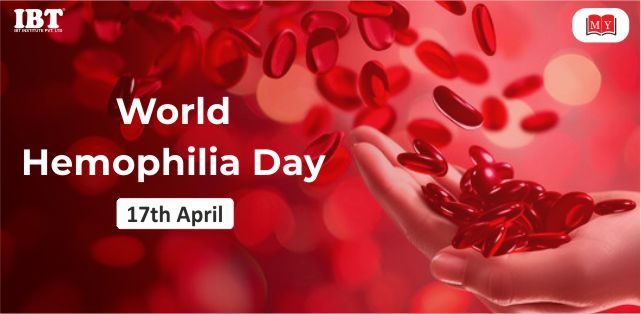
World Hemophilia Day: 17th April
World Hemophilia Day is observed globally on April 17th to increase awareness about hemophilia and other inherited bleeding disorders. It serves as a platform to advocate for better access to care and treatment for everyone living with these conditions.
-
2026 Theme: "Access for All: Advancing Global Standards of Care."
-
Significance: Birth anniversary of Frank Schnabel, founder of the World Federation of Hemophilia (WFH).
-
Color Symbol: Red (Supporters often wear red or light up landmarks in red).
What is Hemophilia?
Hemophilia is a rare, typically inherited genetic disorder where the blood does not clot normally because it lacks sufficient blood-clotting proteins (clotting factors).
The Two Main Types:
-
Hemophilia A: The most common type, caused by a deficiency in Factor VIII (8).
-
Hemophilia B: Also known as "Christmas Disease," caused by a deficiency in Factor IX (9).
Key Symptoms:
-
Unexplained and excessive bleeding from cuts or injuries.
-
Many large or deep bruises.
-
Pain, swelling, or tightness in joints (internal bleeding).
-
Blood in urine or stool.
History and Origin
-
Establishment: The day was first established in 1989 by the World Federation of Hemophilia.
-
Purpose of the Date: April 17th was chosen to honor Frank Schnabel, who was born on this day in 1926. He dedicated his life to improving the lives of those with bleeding disorders.
Scientific Significance: "The Royal Disease"
Hemophilia is famously known as the "Royal Disease" because it spread through the royal families of Europe in the 19th and 20th centuries. Queen Victoria of England was a carrier, and she passed the gene to several of her children, affecting the royal lineages of Russia, Germany, and Spain.
Focus Areas for 2026
The 2026 campaign emphasizes the "Global Standard of Care":
-
Diagnosis: Identifying patients in developing countries who remain undiagnosed.
-
Prophylaxis: Moving toward preventive treatment (regular injections of clotting factor) rather than "on-demand" treatment after a bleed occurs.
-
Gene Therapy: Highlighting recent breakthroughs in gene therapy that offer the potential for long-term cures.
-
Support for Carriers: Recognizing that women who "carry" the gene can also experience significant bleeding symptoms.
Important Facts
-
Genetics: Hemophilia is an X-linked recessive disorder. This means it primarily affects males, while females are typically carriers.
-
World Federation of Hemophilia (WFH): An international non-profit established in 1963, headquartered in Montreal, Canada.
-
Treatment: While there is no definitive cure for most, it is managed through Factor Replacement Therapy.
1 like |
0 comment