4.5/5
4.5/5





World Day to Combat Desertification and Drought: 17th June
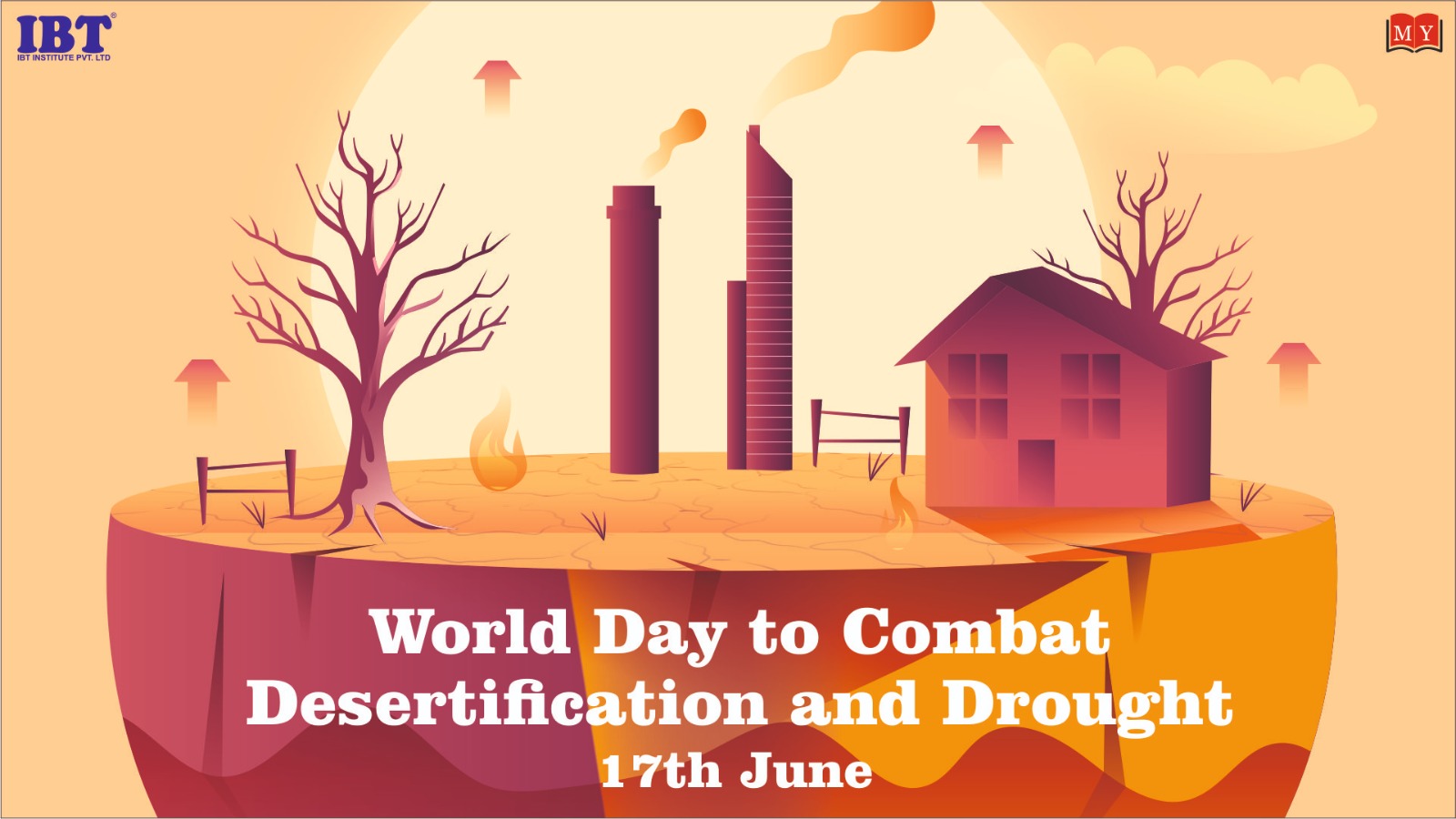
World Day to Combat Desertification and Drought: 17th June
Observed annually on June 17th, the World Day to Combat Desertification and Drought is a United Nations-designated day dedicated to raising global awareness about the pressing issues of land degradation, soil sterility, and water scarcity. It serves as a reminder that healthy land is a fundamental foundation for human survival, economic stability, and environmental resilience.
Defining the Challenge
A common misconception is that this day is about the literal expansion of existing deserts. In reality, desertification refers to the degradation of land in arid, semi-arid, and dry sub-humid areas—often caused by human activities—which transforms once-fertile ground into unproductive, sterile landscapes.
Key Drivers of Land Degradation:
-
Unsustainable Land Management: Overgrazing, intensive monoculture farming, and the removal of native vegetation strip the soil of its nutrients and protection.
-
Deforestation: The loss of tree cover accelerates soil erosion, as roots are no longer present to hold the earth in place or retain moisture.
-
Overexploitation of Water: Excessive extraction from aquifers and poor irrigation practices can lead to soil salinization, making the land hostile to plant life.
-
Climate Change: Rising temperatures and erratic rainfall patterns intensify drought conditions, leaving ecosystems increasingly vulnerable to permanent damage.
2026 Theme: "Rangelands: Recognize. Respect. Restore."
For 2026, the global observance focuses on rangelands, which cover more than half of the Earth's land surface. Despite their vast scale, these ecosystems are often undervalued and overlooked.
-
Recognize: Acknowledge that rangelands are critical for biodiversity, water cycles, and climate regulation. They provide the essential foundation for both local livelihoods and global ecological stability.
-
Respect: Honor the traditional knowledge and stewardship of Indigenous Peoples and pastoralist communities who have maintained these landscapes for generations.
-
Restore: Prioritize the reversal of degradation in rangelands to secure food and water supplies, enhance drought resilience, and protect the cultural identity of the people who depend on these lands.
Why This Matters
Land degradation affects roughly 3.2 billion people globally. When land loses its productivity, the consequences are profound:
-
Food Insecurity: As fertile land vanishes, crop yields drop, threatening the livelihoods of farmers and triggering food shortages.
-
Displacement: Experts warn that by 2045, desertification and land degradation could contribute to the displacement of up to 135 million people worldwide.
-
Increased Disaster Risk: Degraded, dry soil cannot absorb rainfall, which significantly increases the risk of flash floods and dust storms.
-
Loss of Biodiversity: Habitats disappear, leading to a collapse in species diversity and disrupting the natural balance of ecosystems.
A Call to Action
The United Nations Convention to Combat Desertification (UNCCD) emphasizes that "Land Degradation Neutrality" is an achievable goal. Achieving this involves:
-
Protecting existing healthy land from new degradation.
-
Reducing current pressure on soil through sustainable agricultural practices.
-
Investing in restoration projects—such as reforestation, water harvesting, and sustainable grazing—to bring damaged landscapes back to life.
By focusing on our collective relationship with the soil beneath our feet, the World Day to Combat Desertification and Drought serves as a vital platform to advocate for policies and personal habits that treat land not as a commodity, but as an essential, finite resource.
1 like |
0 comment