4.5/5
4.5/5





World Asteroid Day: 30th June
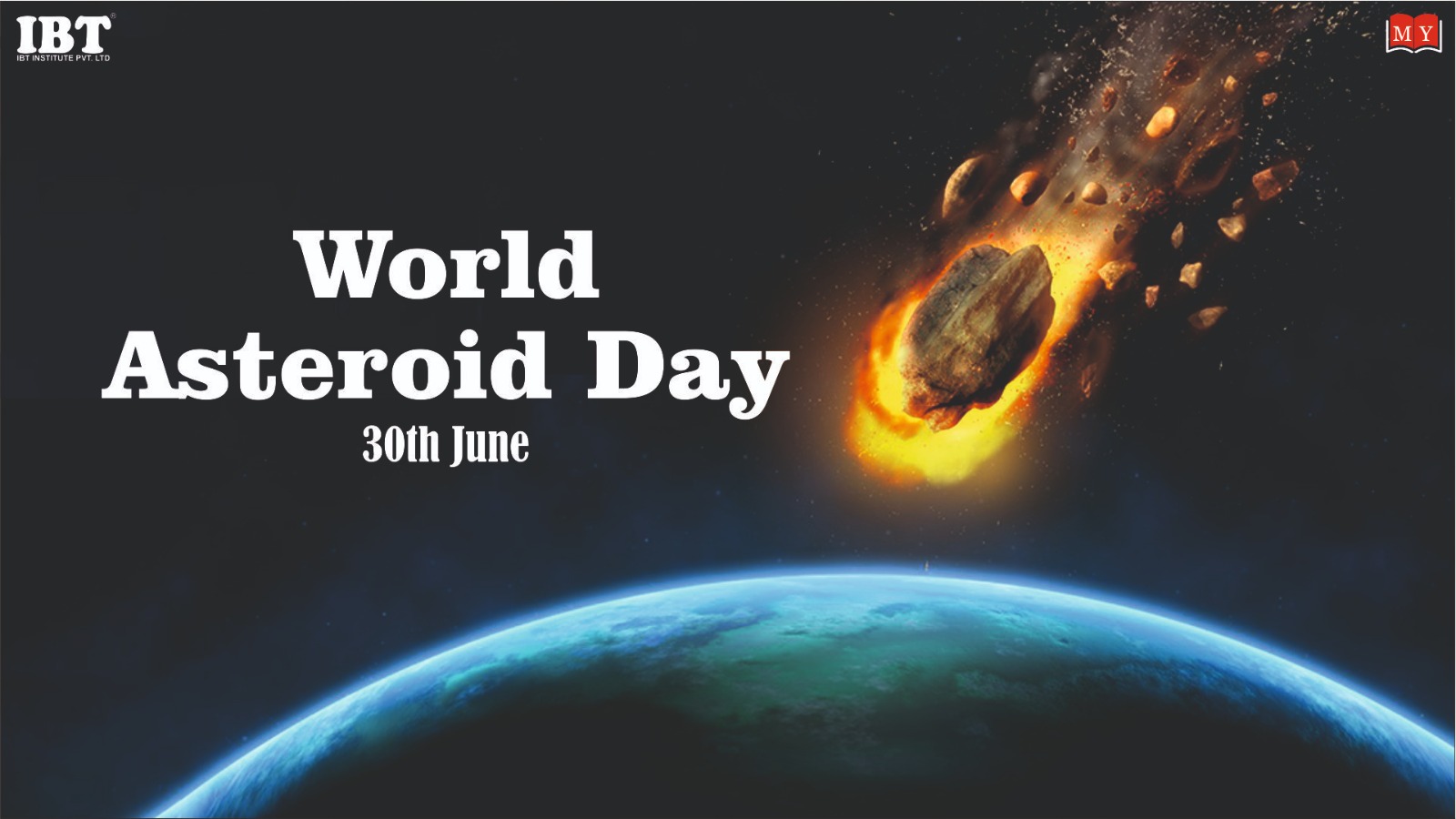
World Asteroid Day: 30th June
Observed annually on June 30th, World Asteroid Day (also known as International Asteroid Day) is a United Nations-sanctioned global awareness campaign. The day serves to educate the public about the risks and opportunities associated with asteroids and to advocate for improved detection and planetary defense strategies.
The Historical Trigger: The Tunguska Event
The date of June 30th was chosen to commemorate the anniversary of the Tunguska impact, which occurred over Siberia, Russia, in 1908.
-
The Incident: On that morning, a massive explosion—estimated to be caused by a small asteroid or comet—leveled approximately 80 million trees over 2,000 square kilometers.
-
The Impact: Though there were no confirmed human casualties due to the remote location, the blast was powerful enough to be felt hundreds of kilometers away. It remains the largest impact event on Earth in recorded history and serves as a sobering reminder of the potential devastation that near-Earth objects (NEOs) can cause.
Why Asteroid Day Matters
Asteroids are remnants of the early solar system. While most orbit peacefully in the belt between Mars and Jupiter, some have orbits that bring them close to Earth.
Planetary Defense
- The primary goal of Asteroid Day is to increase awareness of the need for early detection. If we can identify a potentially hazardous asteroid years or decades in advance, we have the technological potential to deflect it.
Scientific Opportunity
- Asteroids are "time capsules" from the birth of our solar system. Studying their composition provides insights into the origin of water, organic molecules, and the planetary evolution process.
Economic Potential
- With the rise of the space industry, some view asteroids as future mining outposts. These space rocks are often rich in valuable minerals, such as platinum, iron, and nickel, which could eventually be harvested for use in space manufacturing.
2026 Focus: "Awareness and Action"
As of 2026, the focus has shifted toward refining deflection technologies and global tracking cooperation.
-
DART and Beyond: Following the success of past planetary defense missions (such as NASA’s DART mission), the focus is now on developing reliable, multi-national systems for monitoring NEOs.
-
Global Cooperation: Asteroid detection is a planetary issue that requires global data sharing. The International Asteroid Warning Network (IAWN) continues to work to ensure that if a threat is discovered, the information is shared immediately with all affected nations.
-
Public Engagement: Through workshops, media campaigns, and astronomical observations, the day seeks to turn "fear" into "knowledge," encouraging the public to understand that while an impact is a low-probability event, it carries a high-impact risk that requires scientific preparedness.
How It Is Celebrated
World Asteroid Day is celebrated by space agencies, planetariums, and educational organizations worldwide:
-
Educational Events: Schools and museums host activities to explain how asteroids are detected using ground-based telescopes and space-based infrared sensors.
-
Astronomy Nights: Many local astronomy clubs host "star parties," providing the public with opportunities to look at the night sky and learn about the movement of bodies within our solar system.
-
Policy Discussions: Space agencies like ISRO (India), NASA (USA), and ESA (Europe) often use the day to report on their progress in asteroid monitoring and share updates on upcoming missions to collect samples from asteroids.
The Future of Planetary Safety
The message of World Asteroid Day is simple: we are in a vulnerable position only if we are unaware. By investing in science, technology, and international cooperation, we are moving toward a future where a civilization-altering asteroid impact is a manageable risk rather than an inevitable threat.
On June 30th, we honor the pioneers of space exploration and recognize the critical importance of keeping a watchful eye on the cosmos, ensuring the long-term safety of our planet.
1 like |
0 comment