4.5/5
4.5/5





Supreme Court Declares Right to Walk on Safe Footpaths a Fundamental Right
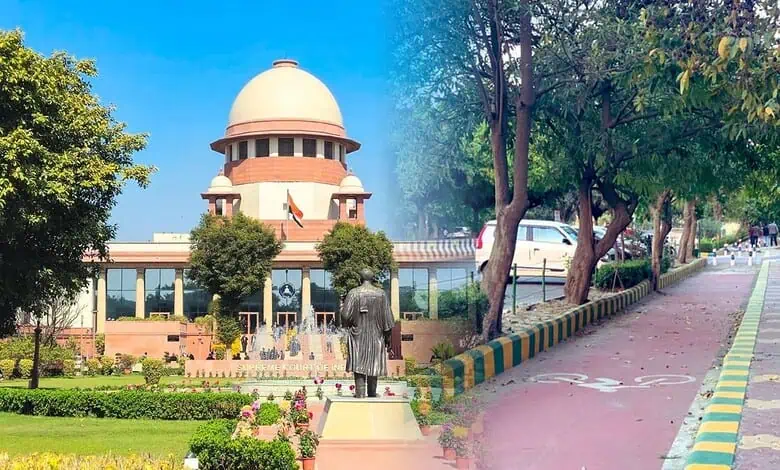
Supreme Court Declares Right to Walk on Safe Footpaths a Fundamental Right
In a landmark judgment, the Supreme Court of India has reaffirmed that the right to walk safely on demarcated footpaths is a fundamental right protected by the Constitution. The Court held that pedestrians are entitled to safe, accessible, and unobstructed footpaths, and that this right takes precedence over the convenience of motor vehicles.
Constitutional Basis
The Court linked the right to walk safely with:
-
Article 21 – Right to Life and Personal Liberty.
-
Article 19(1)(d) – Freedom to move freely throughout the territory of India.
According to the judgment, walking is not merely a mode of transport but an essential aspect of human dignity, personal liberty, and freedom of movement. Therefore, the State has a constitutional obligation to ensure that citizens can move safely on foot.
What the Court Said
The Supreme Court observed that:
-
The fundamental right of citizens to walk on demarcated footpaths must be protected.
-
Pedestrian rights should be given priority over motorized traffic where necessary.
-
Public authorities have a duty to create, maintain, and safeguard footpaths.
-
The absence of safe pedestrian infrastructure can amount to a violation of constitutional rights.
The Bench also emphasized that urban development authorities, municipal corporations, municipalities, and panchayats are responsible for ensuring safe pedestrian infrastructure.
Call for a Legal Framework
The Court noted the need for a comprehensive statutory framework that would:
-
Recognize the right to walk on safe footpaths.
-
Define responsibilities of government agencies.
-
Provide remedies when pedestrian rights are violated.
-
Ensure accountability for failure to maintain pedestrian infrastructure.
It reportedly urged the Union Government to consider legislation requiring properly demarcated footpaths on roads across the country.
Why the Judgment Matters
India records thousands of pedestrian deaths every year due to unsafe roads, missing footpaths, encroachments, poor maintenance, and inadequate urban planning. The ruling shifts the focus of transportation policy from being vehicle-centric to people-centric.
The decision is expected to:
-
Encourage cities to build and maintain footpaths.
-
Improve accessibility for senior citizens and persons with disabilities.
-
Reduce pedestrian accidents.
-
Strengthen accountability of civic authorities.
-
Influence future urban planning and road design.
Challenges Ahead
While the judgment is widely regarded as progressive, experts note that implementation will be crucial. Many Indian cities continue to face issues such as:
-
Encroached footpaths.
-
Illegal parking on walkways.
-
Utility poles and transformers blocking pedestrian paths.
-
Broken or poorly maintained pavements.
-
Absence of footpaths in many areas.
0 like |
0 comment