4.5/5
4.5/5




Sadbhavana Diwas : 20 August 2026
Sadbhavana Diwas : 20 August 2026
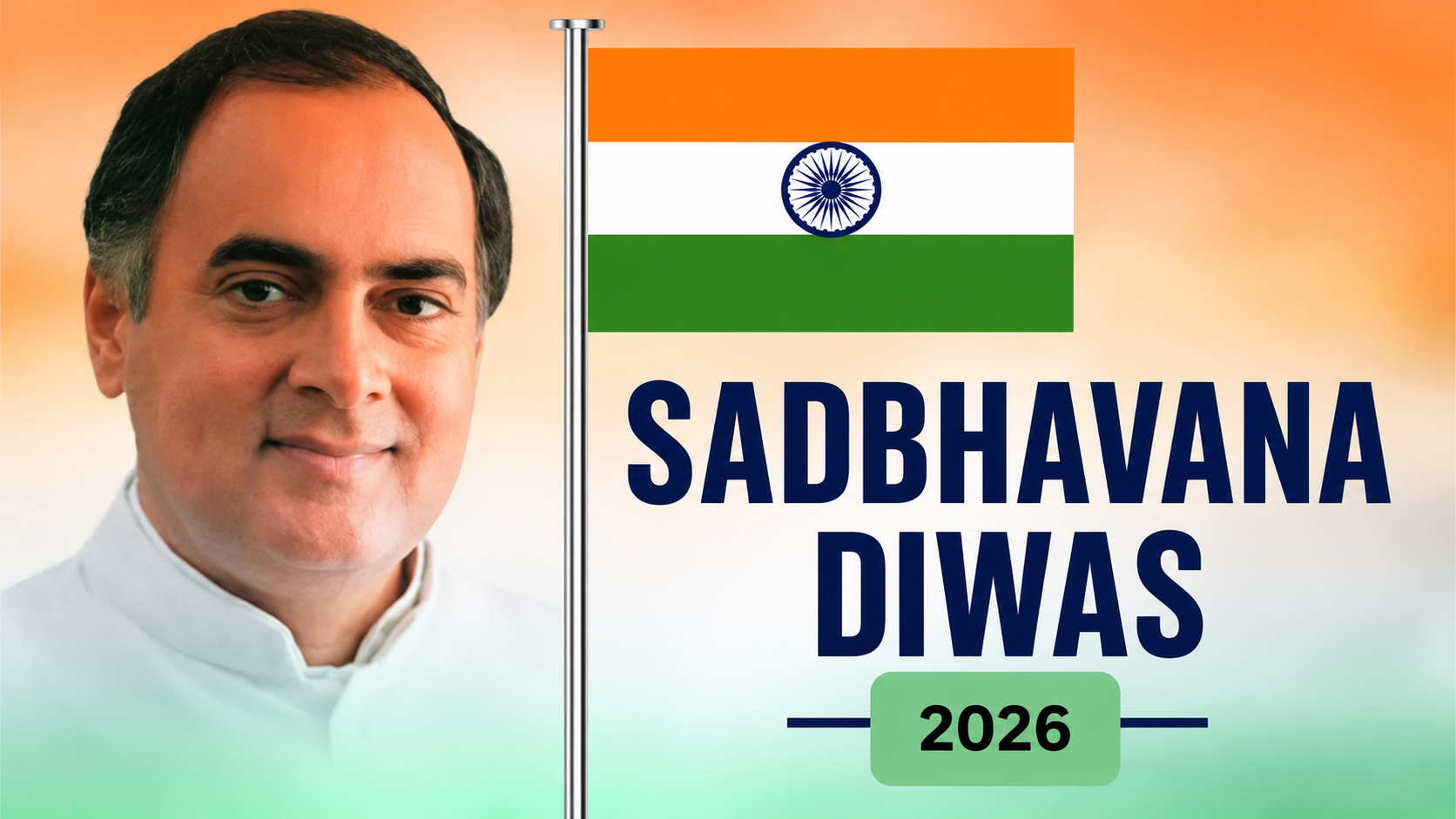
Sadbhavana Diwas 2026 is also known as Harmony Day 2026 or Communal Harmony Day 2026. It will be observed on 20 August 2026 to mark the birth anniversary of former Prime Minister Rajiv Gandhi. The word ‘Sadbhavana’ means goodwill and harmony. The day promotes national integration, communal harmony, peace and emotional unity among citizens. It also encourages people to resolve differences through dialogue and constitutional means without violence.
Why is Sadbhavana Diwas 2026 Celebrated?
Sadbhavana Diwas 2026 is celebrated to promote goodwill, national unity and peaceful coexistence among people belonging to different religions, languages, regions and communities. The observance honours Rajiv Gandhi’s Birth Anniversary 2026. It also highlights the importance of social harmony in a diverse country. Cultural programmes, contests, public activities and environmental initiatives such as sapling plantation are organised in different places.
Sadbhavana Diwas 2026 is celebrated to promote goodwill, national unity and peaceful coexistence among people belonging to different religions, languages, regions and communities. The observance honours Rajiv Gandhi’s Birth Anniversary 2026. It also highlights the importance of social harmony in a diverse country. Cultural programmes, contests, public activities and environmental initiatives such as sapling plantation are organised in different places.
Sadbhavana Diwas 2026 Theme
The Sadbhavana Diwas 2026 Theme has not been officially announced yet. The observance will continue to focus on the core values of national integration, communal harmony, peace, goodwill and emotional unity among people of different religions, languages, regions and cultures. Any official theme for National Harmony Day 2026 will be updated after its formal announcement.
Rajiv Gandhi Birth Anniversary 2026
Rajiv Gandhi Birth Anniversary 2026 will be observed on 20 August, marking his 82nd birth anniversary. Rajiv Gandhi was born on 20 August 1944. He became Prime Minister in 1984 after the assassination of his mother, Indira Gandhi. He served as Prime Minister from 1984 to 1989. At the age of 40, he became the Youngest Prime Minister of India.
The Sadbhavana Diwas 2026 Theme has not been officially announced yet. The observance will continue to focus on the core values of national integration, communal harmony, peace, goodwill and emotional unity among people of different religions, languages, regions and cultures. Any official theme for National Harmony Day 2026 will be updated after its formal announcement.
Rajiv Gandhi Birth Anniversary 2026
Rajiv Gandhi Birth Anniversary 2026 will be observed on 20 August, marking his 82nd birth anniversary. Rajiv Gandhi was born on 20 August 1944. He became Prime Minister in 1984 after the assassination of his mother, Indira Gandhi. He served as Prime Minister from 1984 to 1989. At the age of 40, he became the Youngest Prime Minister of India.
Rajiv Gandhi Biography
Rajiv Gandhi played an important role in India’s political and technological development during the 1980s. His tenure included initiatives in education, telecommunications and rural development. Key facts about his life and public career are given below.
Rajiv Gandhi played an important role in India’s political and technological development during the 1980s. His tenure included initiatives in education, telecommunications and rural development. Key facts about his life and public career are given below.
- Birth: Rajiv Gandhi was born on 20 August 1944. His birth anniversary is observed annually as Sadbhavana Diwas to promote goodwill, national integration and communal harmony.
- Family: Rajiv Gandhi was the son of Indira Gandhi and the grandson of Pandit Jawaharlal Nehru.
- Prime Minister: Rajiv Gandhi became Prime Minister in 1984 following the assassination of Indira Gandhi. He remained in office until 1989 and became India’s youngest Prime Minister at 40.
- Education Policy: In 1986, Rajiv Gandhi’s government introduced the National Policy on Education. It aimed to reform education and improve the quality and reach of higher education institutions.
- Rajiv Gandhi Death: Rajiv Gandhi was assassinated by a suicide bomber associated with the LTTE while campaigning during the 1991 elections.
- Awards and Honors: He was posthumously awarded the Bharat Ratna, India’s highest civilian award.
Contributions of Rajiv Gandhi
-
Jawahar Navodaya Vidyalayas: The Jawahar Navodaya Vidyalaya System was established in 1986. It provided free schooling from Class 6 to Class 12 and focused particularly on students from rural areas.
- Telecommunications: MTNL was established in 1986 during Rajiv Gandhi’s tenure. Public Call Offices, or PCOs, were also promoted to expand access to telephone services, including in rural regions.
- Modernisation: Rajiv Gandhi supported greater use of modern technology and promoted a forward looking approach to national development. His period in office is associated with efforts to expand technology and communications.
Rajiv Gandhi National Sadbhavana Award 2026
The Rajiv Gandhi National Sadbhavana Award 2026 is awarded on the occasion of the Birth Anniversary of Rajiv Gandhi. It recognises contributions towards peace, communal harmony and national integration. The award was instituted by the Congress in 1992, one year after Rajiv Gandhi’s death.
The Rajiv Gandhi National Sadbhavana Award 2026 is awarded on the occasion of the Birth Anniversary of Rajiv Gandhi. It recognises contributions towards peace, communal harmony and national integration. The award was instituted by the Congress in 1992, one year after Rajiv Gandhi’s death.
2024 – Geeta Reddy: Geeta Reddy, a former member of the Telangana Legislative Assembly, was listed as the recipient of the award for 2024.
2023 – Md. Irfan Khan: Md. Irfan Khan received recognition in 2023 for using technology to support education, particularly in remote areas.
2020-2021 – Banasthali Vidyapeeth: Banasthali Vidyapeeth, an educational institution for women in Rajasthan, was recognised for its contribution to women’s education and empowerment.
2018 – Gopalkrishna Gandhi: Gopalkrishna Gandhi, former Governor of West Bengal, was recognised for promoting communal harmony, peace and goodwill.
2017 – M.Gopala Krishna: M.Gopala Krishna, a retired IAS Officer, was listed among the recipients for 2017.
2017 – Md. Azharuddin: Md. Azharuddin, former cricketer, was also listed as a recipient for 2017 in the provided award information.
2016 – Shubha Mudgal: Shubha Mudgal, singer, was recognised with the award in 2016 for her contribution to Indian cultural life.
2014 – Muzaffar Ali: Muzaffar Ali, film maker, was listed as the recipient for 2014.
2013 – Amjad Ali Khan: Amjad Ali Khan, musician, was recognised in 2013. His inclusion reflects the award’s association with cultural contributions and social goodwill.
2023 – Md. Irfan Khan: Md. Irfan Khan received recognition in 2023 for using technology to support education, particularly in remote areas.
2020-2021 – Banasthali Vidyapeeth: Banasthali Vidyapeeth, an educational institution for women in Rajasthan, was recognised for its contribution to women’s education and empowerment.
2018 – Gopalkrishna Gandhi: Gopalkrishna Gandhi, former Governor of West Bengal, was recognised for promoting communal harmony, peace and goodwill.
2017 – M.Gopala Krishna: M.Gopala Krishna, a retired IAS Officer, was listed among the recipients for 2017.
2017 – Md. Azharuddin: Md. Azharuddin, former cricketer, was also listed as a recipient for 2017 in the provided award information.
2016 – Shubha Mudgal: Shubha Mudgal, singer, was recognised with the award in 2016 for her contribution to Indian cultural life.
2014 – Muzaffar Ali: Muzaffar Ali, film maker, was listed as the recipient for 2014.
2013 – Amjad Ali Khan: Amjad Ali Khan, musician, was recognised in 2013. His inclusion reflects the award’s association with cultural contributions and social goodwill.
0 like |
0 comment