4.5/5
4.5/5





Dadabhai Naoroji Birth Anniversary : 4 Sept 2026
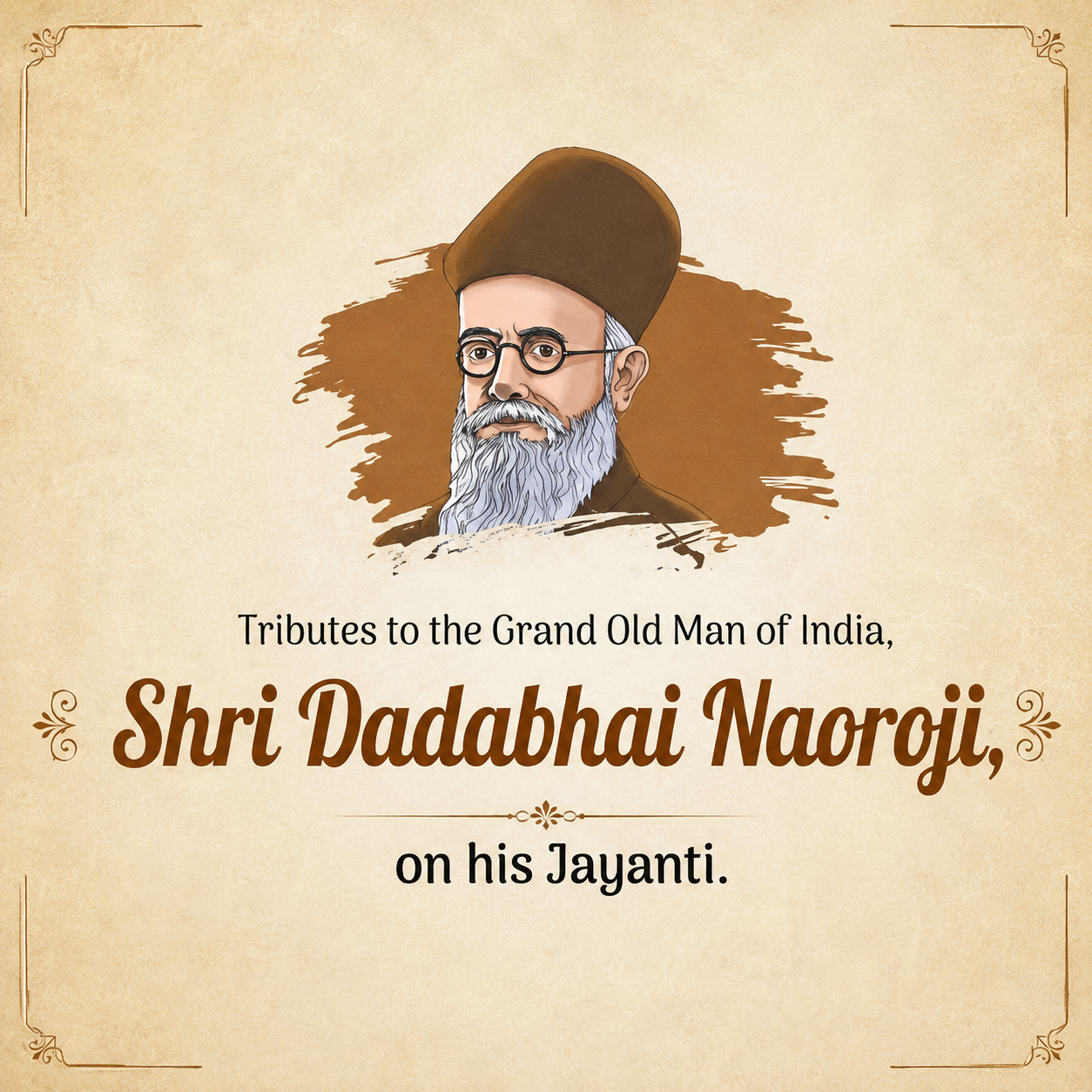
Dadabhai Naoroji Birth Anniversary : 4 Sept 2026
Dadabhai Naoroji Birth Anniversary 2026 is commemorated on 4 September, marking his 201st birth anniversary. Popularly known as the “Grand Old Man of India,” he was one of the leading figures of India’s early nationalist movement.
Who Was Dadabhai Naoroji?
Dadabhai Naoroji was an influential Indian nationalist, economist, political leader and social reformer who highlighted the economic and political problems faced by Indians under British rule.
-
He was born on 4 September 1825 in Bombay, in a Parsi family.
-
He believed that India’s growing poverty was closely connected with British colonial economic policies.
-
He advocated political representation, administrative reforms and self-government through constitutional methods.
-
He was popularly known as the “Grand Old Man of India” and “Unofficial Ambassador of India.”
Drain of Wealth Theory
The Drain of Wealth Theory was one of Dadabhai Naoroji’s most important contributions to Indian economic thought.
-
He argued that a substantial amount of India’s wealth was transferred to Britain without an equivalent economic return to India.
-
Major channels of the drain included salaries and pensions of British officials, remittances, profits and payments made outside India.
-
His arguments challenged the British claim that colonial rule was economically beneficial to India.
-
His economic ideas were elaborated in his famous book Poverty and Un-British Rule in India.
-
He conducted one of the earliest systematic assessments of poverty in India.
-
He was among the earliest Indians to estimate India’s national income and per capita income.
Dadabhai Naoroji and the Indian National Congress
-
He was a founding member and three-time President of the Indian National Congress:
-
1886 – Calcutta Session
-
1893 – Lahore Session
-
1906 – Calcutta Session
-
-
His 1906 Calcutta Session was particularly significant, as the Congress adopted Swaraj as a major political objective.
-
He consistently raised issues related to India’s economic condition, political representation and administrative reforms.
Dadabhai Naoroji in the British Parliament
-
In 1892, he was elected to the British House of Commons from Finsbury Central.
-
He became the first Indian to be elected as a Member of the British Parliament.
-
He represented the Liberal Party.
-
As an MP, he continued to raise India’s economic and political concerns.
Social and Political Contributions
-
Became the first Indian Professor of Mathematics and Natural Philosophy at Elphinstone College.
-
Founded the Rast Goftar newspaper to promote social reform.
-
Co-founded Rahnumai Mazdayasan Sabha (1851) for Parsi social reform.
-
Founded the London Indian Society (1865).
-
Established the East India Association in London in 1866; its Bombay branch was established in 1869 under the presidency of Dr. Bhau Daji Lad.
-
Served as a member of the Welby Commission (1895), which examined Indian expenditure.
Dadabhai Naoroji (1825–1917) – Important Facts
-
Born on 4 September 1825 in Bombay, in a Parsi family.
-
Known as the “Grand Old Man of India” and “Unofficial Ambassador of India.”
-
Dadabhai Naoroji was a businessman and a great publicist who settled in London.
-
First Indian Professor of Mathematics and Natural Philosophy at Elphinstone College.
-
Founded the Rast Goftar newspaper to promote social reform.
-
Co-founded Rahnumai Mazdayasan Sabha (1851) for Parsi social reform.
-
Founded the London Indian Society (1865).
-
Dadabhai Naoroji established the East India Association in London in 1866, and its Mumbai (Bombay) branch was established in 1869 under the presidency of Dr. Bhau Daji Lad.
-
Founding member and three-time President of the Indian National Congress — 1886 (Calcutta), 1893 (Lahore), and 1906 (Calcutta).
-
Developed the Drain of Wealth Theory, explaining the economic drain of India under British rule.
-
Authored Poverty and Un-British Rule in India.
-
Became the first Indian elected to the British House of Commons in 1892.
-
Elected from Finsbury Central on the Liberal Party ticket.
-
Served as a member of the Welby Commission (1895), which examined Indian expenditure.
-
Dadabhai Naoroji divided the Indian economy into two parts: primary sector and secondary sector.
-
In his book Poverty and Un-British Rule in India, Dadabhai Naoroji conducted one of the earliest assessments of poverty.
-
Dadabhai Naoroji was the first to estimate India’s national and per capita income. In his economic analysis (later elaborated in Poverty and Un-British Rule in India), he calculated the per capita income to be about Rs. 20 and used it to support his Drain of Wealth Theory.
-
Sir Syed Ahmad Khan did not accept Dadabhai Naoroji’s Drain Theory.
0 like |
0 comment