4.5/5
4.5/5





Current Affairs 19th February 2026
GAIL Limited
-
Incorporated in August 1984 as a Central PSU under Ministry of Petroleum & Natural Gas.
-
The Indian govt. conferred GAIL with Maharatna PSU status on 1 Feb 2013.
-
HQ: New Delhi
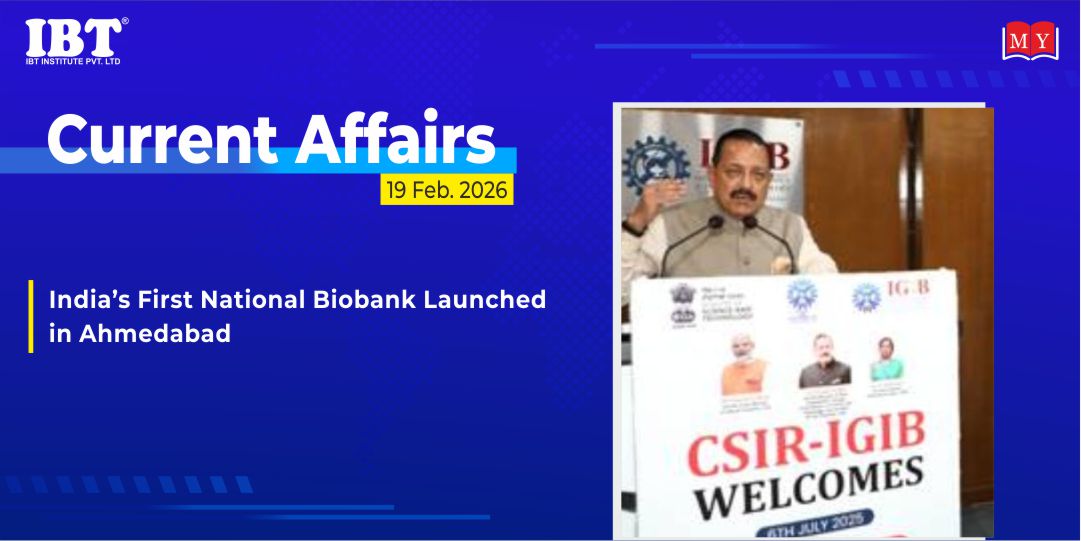
1. India’s First National Biobank Launched in Ahmedabad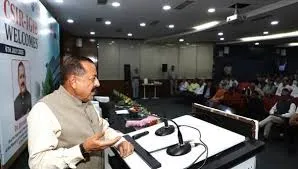
-
Focus on Rare Diseases: This is the first biobank in India specifically dedicated to Lysosomal Storage Disorders, a group of over 70 rare genetic metabolic conditions. It currently integrates clinical and genetic data from 530 patients across 15 states.
-
Lead Institution: The initiative is led by the Foundation for Research in Genetics and Endocrinology (FRIGE) – Institute of Human Genetics in Ahmedabad and is funded by the Department of Biotechnology (DBT).
-
Objective of Precision Medicine: The facility aims to bridge the gap in rare disease research by providing a centralized repository of biological samples (DNA, plasma, urine). This will help scientists develop affordable, indigenous screening tools and therapies, reducing the current reliance on extremely expensive imported treatments.
Footnotes: Ahmedabad's Mayor: Pratibha Jain
2. Tarique Rahman Sworn in as 11th PM of Bangladesh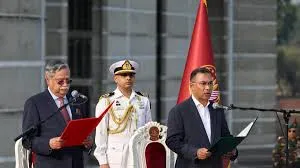
-
Return from Exile & Landslide Victory: After spending 17 years in self-imposed exile in London, Tarique Rahman returned to Bangladesh in late 2025. He led the Bangladesh Nationalist Party (BNP) to a landslide victory in the 13th parliamentary elections, securing 212 of the 300 directly elected seats.
-
End of "Battle of the Begums": His appointment ends a 35-year era (since 1991) where the premiership rotated exclusively between two women: his mother, Khaleda Zia, and her rival, Sheikh Hasina. He is the first male Prime Minister of Bangladesh in over three decades.
-
Transition from Interim Rule: His government officially replaces the interim administration led by Nobel Laureate Muhammad Yunus, which had governed the country for 18 months following the 2024 student-led uprising and the ouster of Sheikh Hasina.
Footnotes: Bangladesh's President: Mohammed Shahabuddin, Capital: Dhaka, Currency: Bangladeshi Taka
3. Supreme Court Declares ‘Menstrual Health’ as a Fundamental Right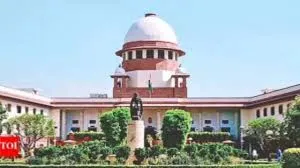
-
Constitutional Protection (Articles 21 & 14): The Bench, led by Justices J.B. Pardiwala and R. Mahadevan, ruled that "period poverty" and the lack of hygiene facilities violate a girl's right to live with dignity and substantive equality. The Court emphasized that a biological process should never become a "structural exclusion" that hinders education or bodily autonomy.
-
Mandate for Free Sanitary Products: The Court directed all states and Union Territories to provide free, oxo-biodegradable sanitary napkins to adolescent girls (Classes 6–12) in all schools—both government and private. It also ordered the installation of menstrual hygiene management (MHM) corners and safe disposal mechanisms (like incinerators) across institutions.
-
Strict Accountability for Schools: The ruling makes infrastructure like gender-segregated toilets and clean water a mandatory requirement. Crucially, the Court warned that private schools could face derecognition if they fail to comply with these hygiene standards, ensuring the right is enforceable rather than just a policy goal.
4. First Indigenous Cadet Training Ship ‘Krishna’ Launched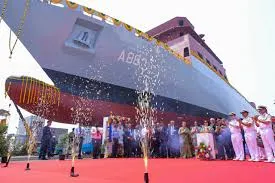
-
A "Floating Classroom" for Future Officers: Designed as a dedicated training platform, the ship features specialized classrooms, a training bridge, and a chart house. It can accommodate 20 officers, 150 sailors, and 200 cadets simultaneously, providing hands-on experience in navigation and seamanship for both Indian (including women) and friendly foreign country cadets.
-
Indigenous Design & Private Partnership: The vessel is a major milestone for 'Aatmanirbhar Bharat', as it was entirely designed and constructed by Larsen & Toubro (L&T). This highlights the growing role of private Indian shipyards in building complex, large-scale naval defense assets.
-
Versatile Secondary Roles: Beyond training, 'Krishna' is equipped to serve as a Hospital Ship and can be deployed for Humanitarian Assistance and Disaster Relief (HADR), Non-Combatant Evacuation Operations (NEO), and Search and Rescue (SAR) missions.
5. India Introduces Comprehensive Framework for AI Governance
-
The "Seven Sutras" of AI: The framework is built on seven core principles—Trust, People First, Innovation over Restraint, Fairness & Equity, Accountability, Understandable by Design, and Safety. These "Sutras" shift the focus from rigid, "one-size-fits-all" laws to a flexible, principle-based approach that prioritizes human agency and socio-economic progress.
-
New Institutional Oversight: To implement these guidelines, the government is establishing three new bodies: the AI Governance Group (AIGG) for inter-ministerial coordination, the India AI Safety Institute (AISI) to set technical standards and conduct risk assessments, and a National AI Incidents Database to track and mitigate harms like deepfakes and algorithmic bias.
-
Techno-Legal & Graded Accountability: Rather than creating a standalone "AI Act," India is integrating AI rules into existing laws (like the DPDPA and IT Rules). It introduces a graded liability system, where the level of accountability depends on the risk level of the AI application (e.g., healthcare or surveillance) and the specific role of the developer or deployer in the value chain.
6. Lalduhoma inaugurated Lengtekai Bridge over the Tlawng River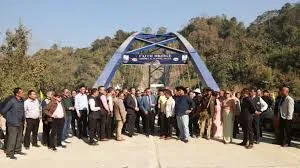
-
Strategic Connectivity (The "Faith Bridge"): Officially named the Faith Bridge, the 100-meter-long steel arch structure provides a crucial link between the state capital, Aizawl, and the state's only airport at Lengpui. It also serves as a vital corridor for the Mamit district, facilitating trade and movement toward Tripura and Bangladesh.
-
Replacement of Outdated Infrastructure: The bridge replaces aging, single-lane Bailey bridges that were frequently damaged and had strict load restrictions. The new structure is designed to carry much heavier loads—up to 385 metric tons—eliminating the need for vehicles to unload before crossing and ensuring uninterrupted traffic flow.
-
Engineering and Investment: Built at a cost of ₹43.83 crore (funded by the Ministry of Road Transport & Highways), the bridge is an engineering milestone for the region. It utilized specialized carbon steel tension rods from Thailand and steel fabricated in Rourkela, overcoming significant technical delays caused by a major equipment failure during its initial launching phase in late 2024.
7. FCI Signs MoU with WFP to Supply 2 Lakh Metric Tonnes of Rice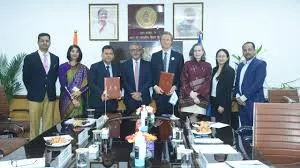
-
Five-Year Strategic Commitment: The agreement establishes a long-term partnership where India will supply 2 lakh metric tonnes of rice (specifically rice with up to 25% broken grains) over the next five years. This grain will be used by the WFP for humanitarian operations in crisis zones and food-insecure regions worldwide.
-
Pricing and Supply Mechanism: To ensure economic feasibility for both parties, the pricing of the rice will be reviewed and mutually agreed upon annually. For the initial period ending March 31, 2026, the price has been fixed at ₹2,800 per quintal.
-
Global Humanitarian Leadership: The MoU, signed by FCI CMD Rabindra Kumar Agarwal and WFP Deputy Executive Director Carl Skau, formalizes India's transition from a food-aid recipient to a "Global Provider." It aligns with India's philosophy of Vasudhaiva Kutumbakam (The World is One Family) and leverages the country's massive agricultural surplus to combat global malnutrition.
8. IDBI Bank Honoured with MSME Leadership Award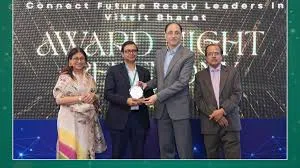
-
Excellence in Sector Growth & Asset Quality: The award, presented by Enqube (a leading authority in MSME excellence), highlighted IDBI Bank’s ability to drive growth in the MSME segment far beyond industry benchmarks. Notably, the bank achieved this while maintaining exemplary asset quality, with a Net NPA (Non-Performing Asset) ratio standing at a record low of 0.21%.
-
Digital Innovation: The bank was specifically lauded for its leadership on the Trade Receivables Discounting System (TReDS) platform, where it achieved the "Highest Throughput" by providing the largest volume of liquidity to small businesses. Its digital underwriting system, i-MSME Express, has also been a game-changer by using real-time GST data to provide fast, collateral-free loans.
-
Commitment to Financial Inclusion: The accolade reflects the bank's deep alignment with government initiatives like Mudra (where it achieved 101% of its target) and PM Vishwakarma.
Footnotes: IDBI Bank's MD & CEO: Rakesh Sharma, HQ: Mumbai, Estd: 1964
WHAT HAPPENED TODAY?
World Anthropology Day: 19th February
-
Theme 2026: “Celebrate. Engage. Inspire.”
This celebrates human cultural diversity and the field of anthropology
1 like |
0 comment