4.5/5
4.5/5





Current Affairs 03rd April 2026
IMPORTANT FACTS
-
1stGENReforms start: 1991
-
1stGENreforms are related to: New Economic Policy (LPG)
-
Full form of LPG: Liberalization, Privatization, Globalization
-
Main Aim of 1st GENreforms: To reduce government control over the economy
-
2ndGENReforms begin: After 2000
-
2nd GEN reforms focus on: Structural reforms
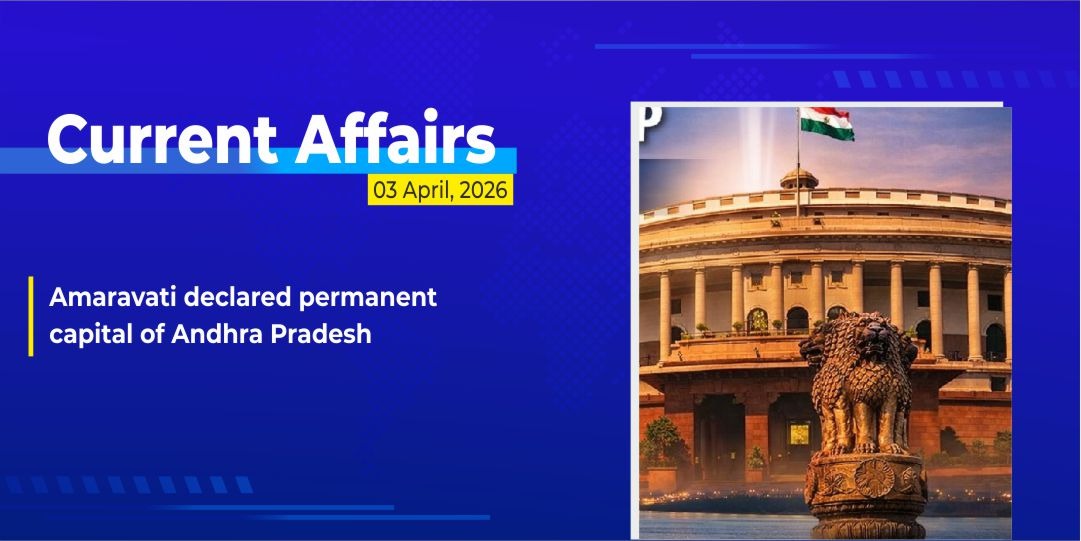
1. Amaravati declared permanent capital of Andhra Pradesh
-
Statutory Legal Status: Parliament passed the Andhra Pradesh Reorganisation (Amendment) Bill, 2026, which officially grants Amaravati statutory recognition as the sole and permanent capital. This ends years of legal and political ambiguity by specifically naming Amaravati in the central law that bifurcated the state in 2014.
-
Retrospective Implementation: The declaration is deemed to have come into force retrospectively from June 2, 2024. This date aligns with the end of the 10-year period during which Hyderabad served as the joint capital and marks the official transition to Amaravati as the successor capital.
-
End of the "Three-Capital" Model: This federal legislation effectively overrides and settles the previous "Three-Capital" proposal (which sought to split functions between Visakhapatnam, Amaravati, and Kurnool).
Footnotes: AP's Governor: Syed Abdul Nazeer, CM: N. Chandrababu Naidu
2. Lok Sabha approved the Jan Vishwas Bill, 2026
-
Mass Decriminalization: The Bill amends 784 provisions across 79 Central Acts administered by 23 Ministries. Its primary goal is to decriminalize 717 provisions, shifting minor, technical, or procedural defaults from criminal imprisonment to civil penalties or simple warnings.
-
Dual-Purpose Reform: It is specifically designed to enhance two key government metrics: Ease of Doing Business (by reducing the compliance burden on industries and startups) and Ease of Living (by ensuring citizens are not treated as criminals for minor lapses, such as expired driving licenses).
-
Administrative Adjudication: To reduce the burden on the judiciary, the Bill introduces a new enforcement mechanism. It allows for the appointment of Adjudicating Officers and Appellate Authorities within government departments to handle settlements and levy fines, moving these cases out of the traditional court system.
3. Lt Gen Sandeep Jain Takes Charge of Southern Command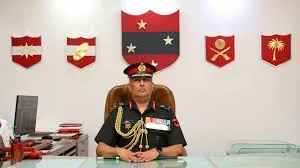
-
Succession and Background: Lt Gen Sandeep Jain succeeds Lt Gen Dhiraj Seth, who has moved on to become the Vice Chief of the Army Staff. An alumnus of the National Defence Academy (NDA), Lt Gen Jain was commissioned into the MAHAR Regiment in June 1988 and has nearly four decades of distinguished service.
-
Operational Expertise: He brings extensive experience from diverse environments, having previously commanded an Infantry Battalion in the UN Mission in South Sudan, a Counter Insurgency Force, and a Pivot Corps in the Northern Command. He also served as the Chief of Staff at the Southern Command headquarters prior to this promotion.
-
Strategic Priorities: Upon taking charge, he emphasized a focus on operational readiness across the Southern Command's vast geography (including deserts, coastlines, and island territories).
4. Indigenous Stealth Frigate ‘Dunagiri’ Delivered To Indian Navy
-
Project 17A Milestone: ‘Dunagiri’ (Yard 3023) is the fifth ship of the Nilgiri-class (Project 17A) and the second built by Garden Reach Shipbuilders and Engineers (GRSE), Kolkata. It is a follow-on to the Shivalik-class frigates, featuring improved stealth, advanced weapons, and upgraded sensor suites.
-
Technological Prowess: The warship is equipped with state-of-the-art systems, including BrahMos supersonic cruise missiles, MFSTAR (radar), and MRSAM (air defence). It is powered by a CODOG (Combined Diesel or Gas) propulsion system, allowing for high-speed multi-dimensional operations across air, surface, and sub-surface domains.
-
Aatmanirbharta (Self-Reliance): The frigate boasts approximately 75% indigenous content, involving over 200 Indian MSMEs. Notably, the construction period was compressed to 80 months, demonstrating India's maturing expertise in advanced "Integrated Construction" methodologies.
5. Delhi Government Launches the LakhpatiBitiya Yojana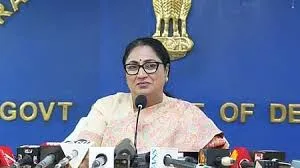
-
Revamped "Ladli Scheme": This scheme replaces and upgrades the older Ladli Yojana (2008). It increases the government’s total investment per girl from ₹36,000 to ₹56,000–₹61,000. With accrued interest (managed via SBI Life), the total maturity amount exceeds ₹1.20 Lakh by the time the beneficiary turns 21.
-
Eligibility & Purpose: To qualify, the girl must be born in Delhi, and the family must have a Delhi residence of at least 3 years with an annual income not exceeding ₹1.20 Lakh. The scheme is limited to two daughters per family and is strictly designed to ensure girls remain unmarried until age 18 and complete their higher education.
-
Strict Conditionalities & Social Reform: The scheme acts as a tool for social engineering by mandating that the beneficiary must remain unmarried until the age of 18 and complete mandatory immunization as per government norms.
6. IAS Chanchal Kumar Takes Charge as I&B Secretary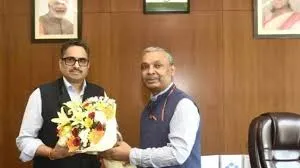
-
Cadre and Background: Chanchal Kumar is a 1992-batch IAS officer of the Bihar cadre. He holds a strong academic background with B.Tech and M.Tech degrees from IIT Kanpur and a Ph.D. in Economics from Patna University.
-
Direct Role Swap: His appointment was part of a major bureaucratic reshuffle by the Appointments Committee of the Cabinet (ACC). He swapped positions with Sanjay Jaju (1992-batch, Telangana cadre); while Kumar moved from the Ministry of Development of North Eastern Region (DoNER) to I&B, Jaju took over as the new Secretary of DoNER.
-
Diverse Administrative Experience: Prior to this role, he served in high-level positions including Secretary in the Ministry of Civil Aviation, Managing Director of the NHIDCL (National Highways and Infrastructure Development Corporation Ltd), and Principal Secretary to the Chief Minister of Bihar.
7. Ashwini Bhide Becomes First Woman BMC Commissioner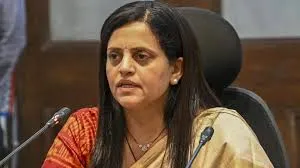
-
Historic Appointment: Ashwini Bhide, a 1995-batch IAS officer of the Maharashtra cadre, is the first woman to lead the BMC, which is India's richest civic body. She succeeded Bhushan Gagrani following his retirement.
-
"Metro Woman" of Mumbai: She earned this nickname for her pivotal role as the Managing Director of the Mumbai Metro Rail Corporation (MMRC), where she spearheaded the execution of the Mumbai Metro Line 3 (Aqua Line)—the city's first underground metro corridor.
-
Extensive Civic Experience: Before this top role, she served as the Additional Municipal Commissioner in the BMC (2020–2024), where she was instrumental in managing the COVID-19 pandemic response and overseeing the Mumbai Coastal Road Project.
8. DGCA Signs MoU With Gati Shakti Vishwavidyalaya For Aviation Training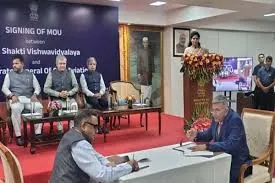
-
New Degree Program (B.Sc. in AME): The primary focus of the MoU is the launch of a first-of-its-kind, industry-aligned three-year B.Sc. in Aviation Maintenance Engineering (AME). Starting from the 2026-27 academic year (August 2026), this degree will bridge the gap for technical staff who have skills but lack formal academic credentials, enhancing their career progression globally.
-
Research & Capacity Building: GSV will act as a strategic research and knowledge partner for the DGCA. The collaboration will focus on cutting-edge areas such as Sustainable Aviation Fuels (SAF), aircraft parts manufacturing, and high-precision engineering. Additionally, GSV will provide specialized training and capacity-building programs for DGCA officers.
-
National MRO Strategy: The partnership aligns with the government’s goal to make India a global MRO hub. By integrating DGCA’s regulatory standards (CAR-66/147) with GSV’s academic curriculum and existing industry ties (with giants like Airbus and Safran).
WHAT HAPPENED TODAY
-
1984 – Return of India’s first astronaut
-
Rakesh Sharma returned to Earth aboard Soyuz T-11.
1 like |
0 comment