4.5/5
4.5/5





Ayushman Bharat Digital Mission
Ayushman Bharat Digital Mission
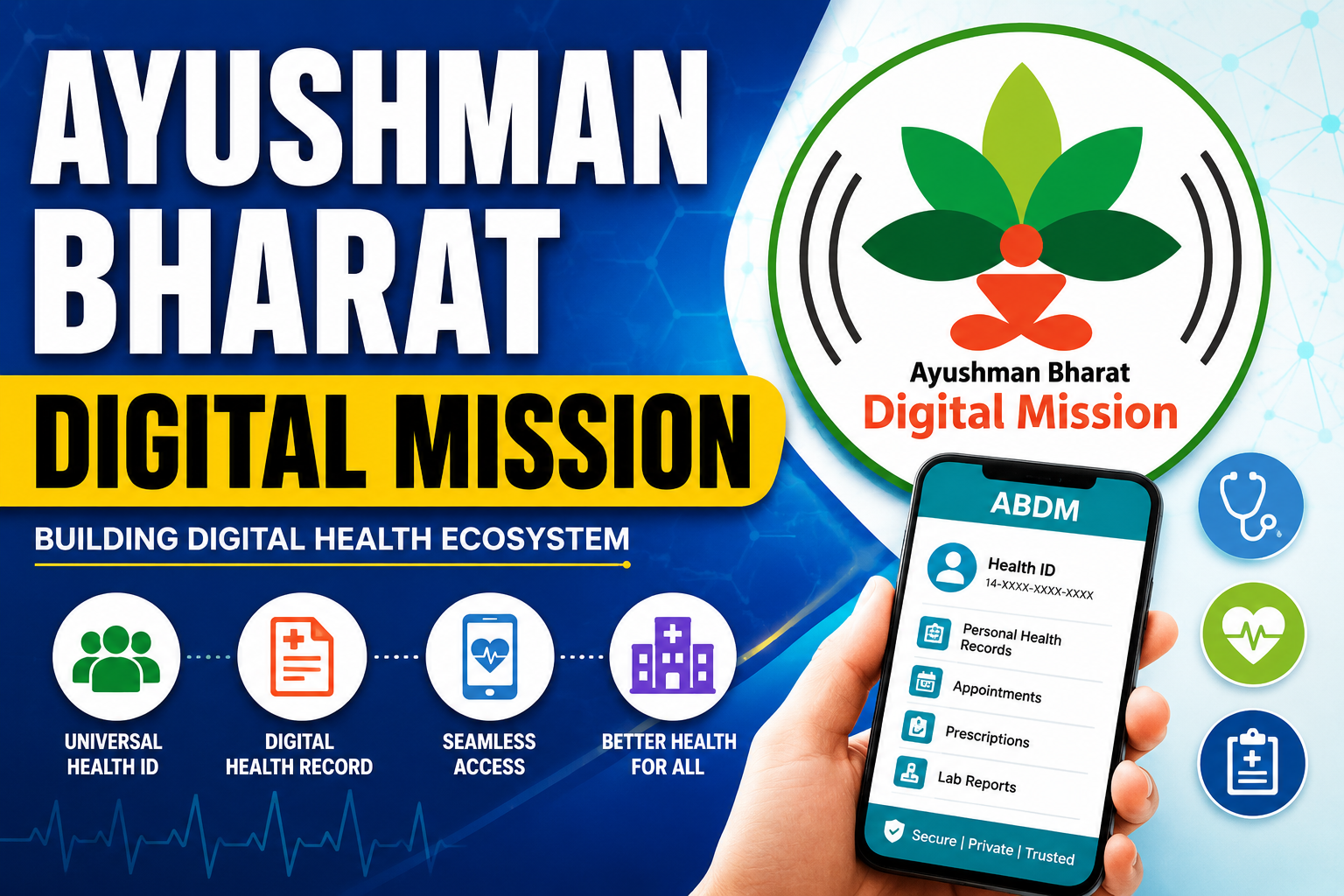
Ayushman Bharat Digital Mission (ABDM) is a central sector scheme aiming to create a unified digital health infrastructure in India, enabling citizens, healthcare providers, and insurers to securely access, share, and manage health records.
Quick Facts
-
Purpose: To integrate digital health solutions for continuum of care, and effective utilization of resources
-
Type: Central Sector Scheme
-
Tenure: 5 years
-
Implementing Agency: National Health Authority (NHA)
Objective:
-
To develop robust digital backbone to support the integrated digital health infrastructure and bridging gaps among stakeholders in India's healthcare ecosystem.
Salient features
Key components
- ABHA and ABHA App: 14-digit health ID for digital record access; app for uploading/scanning health documents.
- Health Facility Registry: Database of all public & private healthcare facilities.
- Healthcare Professionals Registry: Database of all medical professionals (modern & traditional medicine).
- Unified Health Interface (UHI): Open platform for appointments, teleconsultations, etc.
- Health Information Exchange and Consent Manager (HIE-CM): Empowers citizens to securely access and share their health records, ensuring that data exchange is driven by informed consent.
- National Health Claims Exchange (HCX): Standardizes and speeds up insurance claims.
- Microsite Project: A network of healthcare providers labs, pharmacies etc. in a defined area or group to boost ABDM adoption, especially for private sector providers.
Key Initiatives of ABDM:
- Scan and Share: QR-based OPD registration reduces waiting times.
- Digital Health Incentive Scheme (DHIS): Offers up to ₹4 crore incentives, driving public and private sector adoption of digital health practices.
What are the Key Features of Ayushman Bharat Health Accounts (ABHA)?
About: The Ayushman Bharat Health Account (ABHA) is a 14-digit unique health identifier created under the Ayushman Bharat Digital Mission (ABDM). It securely links an individual with India’s digital health ecosystem and enables access to digital health services.
Objective: ABHA aims to create a portable, paperless and consent-based digital health record system, allowing citizens to access and share their medical history across ABDM-enabled healthcare facilities.
Key Features: ABHA links health records across hospitals, laboratories, insurers and national health programmes with the patient’s consent. It allows individuals to store, access and share their health records digitally. Doctors and healthcare providers can access previous medical records only through revocable and time-bound consent of the patient.
Interoperability: ABHA enables seamless portability of health records across different healthcare providers and locations, helping patients access services without carrying physical documents.
Reduction in Waiting Time: Through services like Scan and Share, ABHA enables QR-based OPD registration and digital queue tokens, reducing hospital waiting time from nearly one hour to around 2–5 minutes.
Integration with Health Services: It connects patients with doctors, hospitals, laboratories, pharmacies, insurers and digital health applications through a unified and interoperable network.
Support for Insurance Claims: ABHA also supports integration with the National Health Claims Exchange (NHCX), helping streamline health insurance claims, reduce discharge delays and improve transparency in claim processing.
Privacy and Consent: ABHA follows a privacy-by-design approach. Health records are not stored on a central government server and can be shared only with the patient’s consent.
Significance: ABHA helps reduce paperwork, avoid duplication of tests, improve continuity of care, support faster service delivery and strengthen India’s movement towards Universal Health Coverage.
About: The Ayushman Bharat Health Account (ABHA) is a 14-digit unique health identifier created under the Ayushman Bharat Digital Mission (ABDM). It securely links an individual with India’s digital health ecosystem and enables access to digital health services.
Objective: ABHA aims to create a portable, paperless and consent-based digital health record system, allowing citizens to access and share their medical history across ABDM-enabled healthcare facilities.
Key Features: ABHA links health records across hospitals, laboratories, insurers and national health programmes with the patient’s consent. It allows individuals to store, access and share their health records digitally. Doctors and healthcare providers can access previous medical records only through revocable and time-bound consent of the patient.
Interoperability: ABHA enables seamless portability of health records across different healthcare providers and locations, helping patients access services without carrying physical documents.
Reduction in Waiting Time: Through services like Scan and Share, ABHA enables QR-based OPD registration and digital queue tokens, reducing hospital waiting time from nearly one hour to around 2–5 minutes.
Integration with Health Services: It connects patients with doctors, hospitals, laboratories, pharmacies, insurers and digital health applications through a unified and interoperable network.
Support for Insurance Claims: ABHA also supports integration with the National Health Claims Exchange (NHCX), helping streamline health insurance claims, reduce discharge delays and improve transparency in claim processing.
Privacy and Consent: ABHA follows a privacy-by-design approach. Health records are not stored on a central government server and can be shared only with the patient’s consent.
Significance: ABHA helps reduce paperwork, avoid duplication of tests, improve continuity of care, support faster service delivery and strengthen India’s movement towards Universal Health Coverage.
0 like |
0 comment