4.5/5
4.5/5





18th April: World Heritage Day
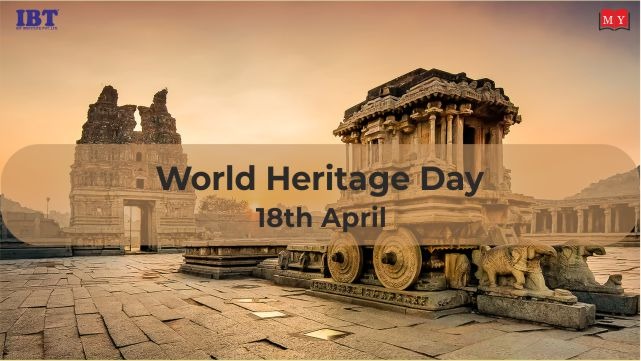
18th April: World Heritage Day
World Heritage Day, officially known as the International Day for Monuments and Sites, is celebrated on April 18th each year. It is a day dedicated to celebrating the diversity of human heritage and advocating for the preservation of ancient monuments and cultural sites for future generations.
-
2026 Theme: "Heritage Resilience: Navigating Natural and Human-Induced Change."
-
Organized by: International Council on Monuments and Sites (ICOMOS).
-
Significance: Raising global awareness about the vulnerability of cultural sites.
History and Origin
-
Establishment: The idea was first proposed by ICOMOS on April 18, 1982.
-
UNESCO Approval: The date was officially approved by the UNESCO General Conference at its 22nd session in 1983.
-
The Mission: The goal was to establish a day that goes beyond "tourism" to highlight the importance of conservation and the threats posed by climate change, conflict, and urbanization.
Understanding UNESCO World Heritage Sites
A World Heritage Site is a landmark or area with "Outstanding Universal Value" (OUV) that is legally protected by an international convention. These sites are classified into three categories:
-
Cultural Sites: Man-made structures or historic towns (e.g., Taj Mahal, Great Wall of China).
-
Natural Sites: Ecosystems, geological formations, or habitats of threatened species (e.g., Kaziranga National Park, Grand Canyon).
-
Mixed Sites: Sites that contain elements of both cultural and natural significance (e.g., Khangchendzonga National Park).
Global vs. Indian Context
As of 2026, the list of World Heritage Sites continues to grow, with India holding a prominent position globally.
-
India's Status: India ranks among the top 10 countries globally in terms of the number of World Heritage Sites.
-
Latest Additions: Recent years have seen the inclusion of sites like Santiniketan (West Bengal) and the Sacred Ensembles of the Hoysalas (Karnataka).
-
UNESCO Headquarters: Located in Paris, France.
Key Focus Areas for 2026
The 2026 theme, "Heritage Resilience," focuses on how historical sites can survive modern challenges:
-
Climate Adaptation: Protecting coastal monuments from rising sea levels and erosion.
-
Sustainable Tourism: Balancing the economic benefits of visitors with the physical preservation of fragile structures.
-
Community Involvement: Empowering local and indigenous communities to act as the primary guardians of their heritage.
-
Digital Preservation: Using 3D scanning and VR to document sites that are at risk of destruction in conflict zones.
Important Facts
-
ICOMOS: A global non-governmental organization associated with UNESCO, dedicated to the conservation of the world's monuments and sites.
-
Operational Guidelines: Sites must meet at least one of the ten selection criteria to be inscribed on the list.
-
World Heritage Fund: Provides financial assistance to states for the protection of sites on the "World Heritage in Danger" list.
-
India's First Sites (1983): The first sites inscribed from India were the Ajanta Caves, Ellora Caves, Agra Fort, and the Taj Mahal.
1 like |
0 comment