4.5/5
4.5/5





13th April: Jallianwala Bagh Remembrance Day
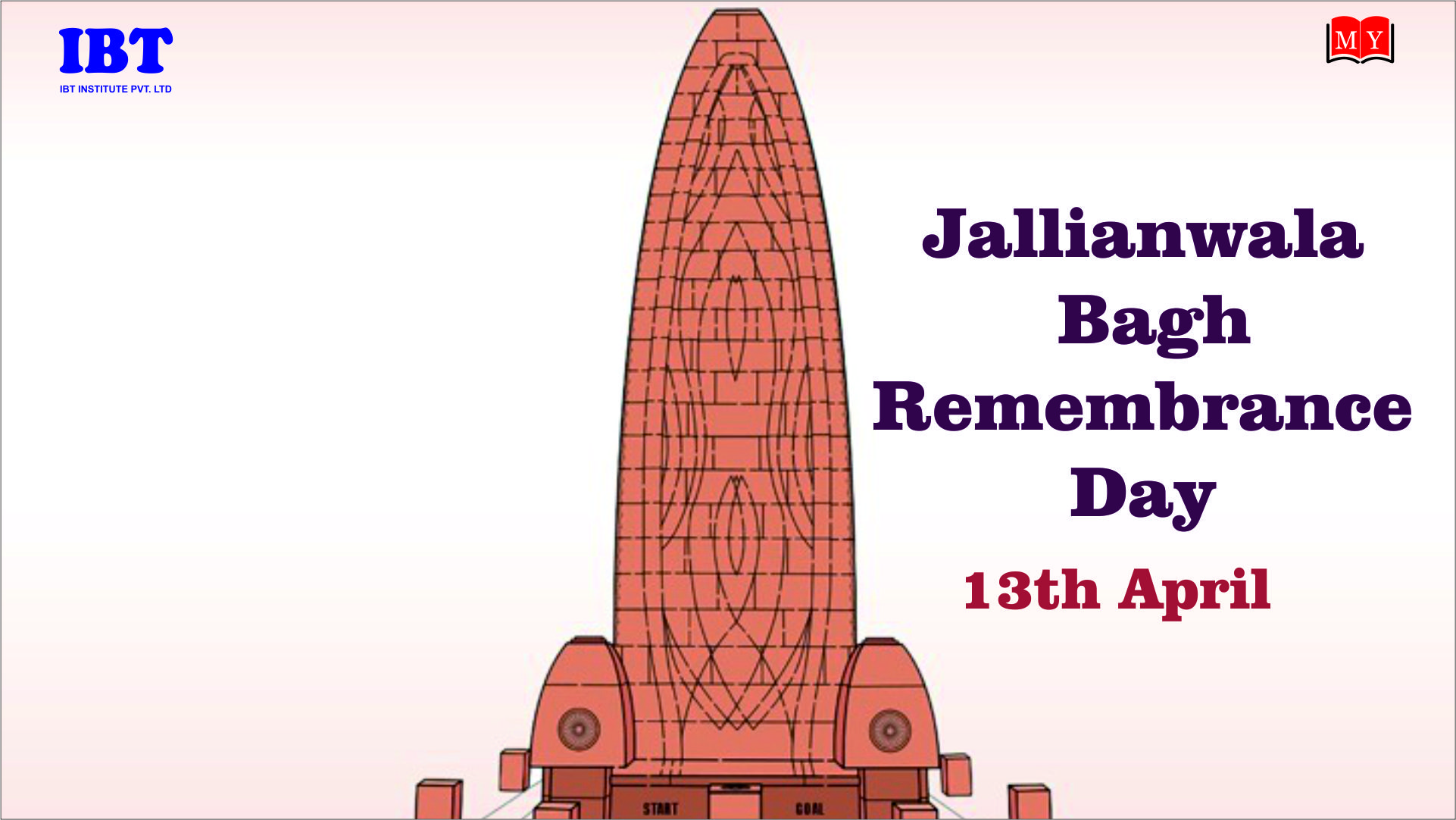
13th April: Jallianwala Bagh Remembrance Day
The Jallianwala Bagh Massacre, also known as the Massacre of Amritsar, stands as one of the most tragic yet pivotal turning points in the history of the Indian Freedom Struggle. Observed every April 13th, this day honors the hundreds of non-violent protesters who lost their lives in 1919.
-
Date of Incident: 13th April 1919 (Baisakhi Day).
-
Location: Jallianwala Bagh, near the Golden Temple, Amritsar, Punjab.
-
Key Figure (British): Acting Brigadier-General Reginald Dyer.
-
Inquiry Commission: The Hunter Commission (Disorders Inquiry Committee).
The Historical Context
The massacre was the result of escalating tensions following World War I.
-
The Rowlatt Act (1919): Also known as the "Black Act," it allowed the British government to imprison any person suspected of "sedition" without a trial for up to two years.
-
The Protest: Leaders Dr. Saifuddin Kitchlew and Dr. Satyapal were arrested for opposing the Act. On April 13, a crowd gathered at Jallianwala Bagh to peacefully protest these arrests and celebrate the festival of Baisakhi.
The Incident
-
The Trap: General Dyer entered the park, which was enclosed by high walls and had only one narrow exit.
-
The Fire: Without any prior warning, he ordered his troops to open fire on the unarmed crowd. The firing lasted for about 10 minutes, exhausting 1,650 rounds of ammunition.
-
The Toll: While official British figures cited 379 dead, Indian National Congress estimates suggested over 1,000 fatalities and more than 1,500 wounded. Many jumped into the "Martyrs' Well" inside the park to escape the bullets.
The Aftermath and Impact
The brutality of the event sent shockwaves across the globe and fundamentally changed the course of Indian nationalism.
-
Renunciation of Titles: Rabindranath Tagore renounced his Knighthood in protest, stating that such honors "make our shame glaring in their incongruous context of humiliation."
-
Shift in Leadership: Mahatma Gandhi, disillusioned by British "justice," launched the Non-Cooperation Movement (1920-22), marking the transition from seeking moderate reforms to demanding full independence (Purna Swaraj).
-
Udham Singh’s Revenge: In 1940, Indian revolutionary Udham Singh assassinated Michael O'Dwyer (who was the Lieutenant Governor of Punjab at the time of the massacre) in London as an act of retribution.
Commemoration
-
National Memorial: In 1951, the Government of India established a memorial at the site. The "Flame of Liberty" stands there today as a tribute.
-
Bullet Marks: The walls of the park still bear the bullet holes, preserved to remind visitors of the violence inflicted that day.
-
Recent Renovations: The complex underwent a major restoration in recent years, including the addition of digital galleries and a light-and-sound show to educate younger generations.
0 like |
0 comment